How to Tell When Random Chat Stops Feeling Refreshing

 0
0
 0
0
Conversation Burnout: When to Take a Break from Random Chat
Sometimes you close a random chat session and feel better. Other times, you close it and feel oddly empty, irritated or mentally crowded. Nothing dramatic happened. No one necessarily upset you. You are simply done with hearing another voice, answering another question and starting another small conversation from zero.
That feeling deserves attention. Random chat can be a fun way to meet people, practise conversation and break up a quiet evening. It can also become another stream of decisions: stay or skip, answer or ignore, explain yourself or move on.
This article uses “conversation burnout” as a practical description, not a medical diagnosis. It is for adults using 18+ online social platforms who want to notice when a break would make the experience healthier and more enjoyable.
You do not have to dislike people to need a break from meeting new ones.
Why random chat can feel draining even when nothing went wrong
Every new match asks for a little effort. You interpret a face, choose an opening line, listen for tone, decide what to share and work out whether the other person wants to continue. One conversation is easy. Many conversations in a row can create a quiet form of emotional and cognitive load.
There is also the pressure of being immediately available. A pause can feel like a problem. A short answer can feel like a challenge. A skip can make you wonder whether you should have said something different.
Digital exhaustion is not limited to work meetings. Harvard Business Review describes how constant digital demands can drain attention and make it harder to recover. Its guidance on digital exhaustion supports a useful idea for random chat: recovery is easier when you create deliberate limits instead of waiting until you are completely depleted.
Conversation burnout versus ordinary boredom: how to tell the difference
Boredom usually means that the current interaction is not interesting. You may skip once, find a better topic or leave for the evening. Burnout is broader. Even a good conversation feels like work, and the idea of starting another one creates tension rather than curiosity.
Look at what happens before, during and after a session. Do you open the platform automatically when you are not sure what else to do? Do you continue after you have stopped enjoying it? Do you feel less patient with ordinary questions? These patterns matter more than one awkward match.
You do not need to label yourself. The label is only useful if it helps you make a better choice: pause, reduce the session length, switch formats or return later with a clearer reason for being there.
8 signs you may need a break from random chat
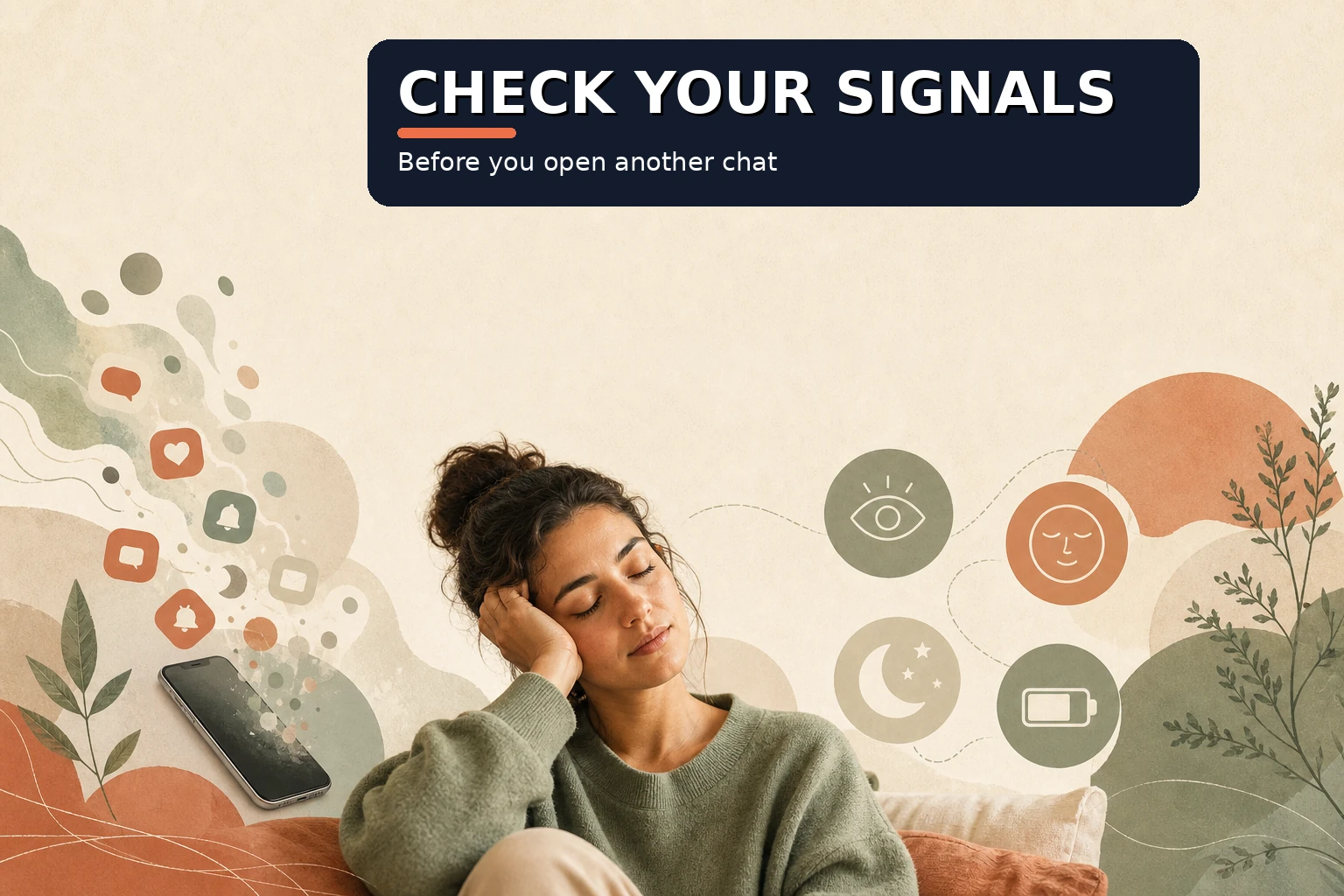
- You open the platform from habit rather than a genuine wish to talk.
- You feel tired before the first match begins.
- Small misunderstandings make you unusually angry.
- You keep clicking next but do not feel more interested in the next person.
- You are listening only for a reason to leave.
- You postpone sleep, meals or planned activities to continue searching.
- You feel worse about yourself after comparing your life with strangers.
- You close the session and immediately want to escape into another feed or app.
One sign is not a verdict. Several signs appearing together are a good reason to change the routine for a few days.
How to choose between a short pause and a full reset
A short pause may be enough when you are simply overstimulated. Close the tab, put the phone down and do something physical or quiet for 20 minutes. Stretch, make tea, take a walk or sit somewhere without another stream of notifications.
A longer reset makes more sense when the habit has started to feel automatic. Choose a defined period such as one evening, a weekend or seven days. The point is not to prove discipline. It is to see how your mood and attention change when the next conversation is not always one click away.
Make the break specific. “I will use my phone less” is vague. “I will not join random chat after 10 p.m. this week” gives you a decision you can actually follow.
What a useful 7-day random-chat reset can look like
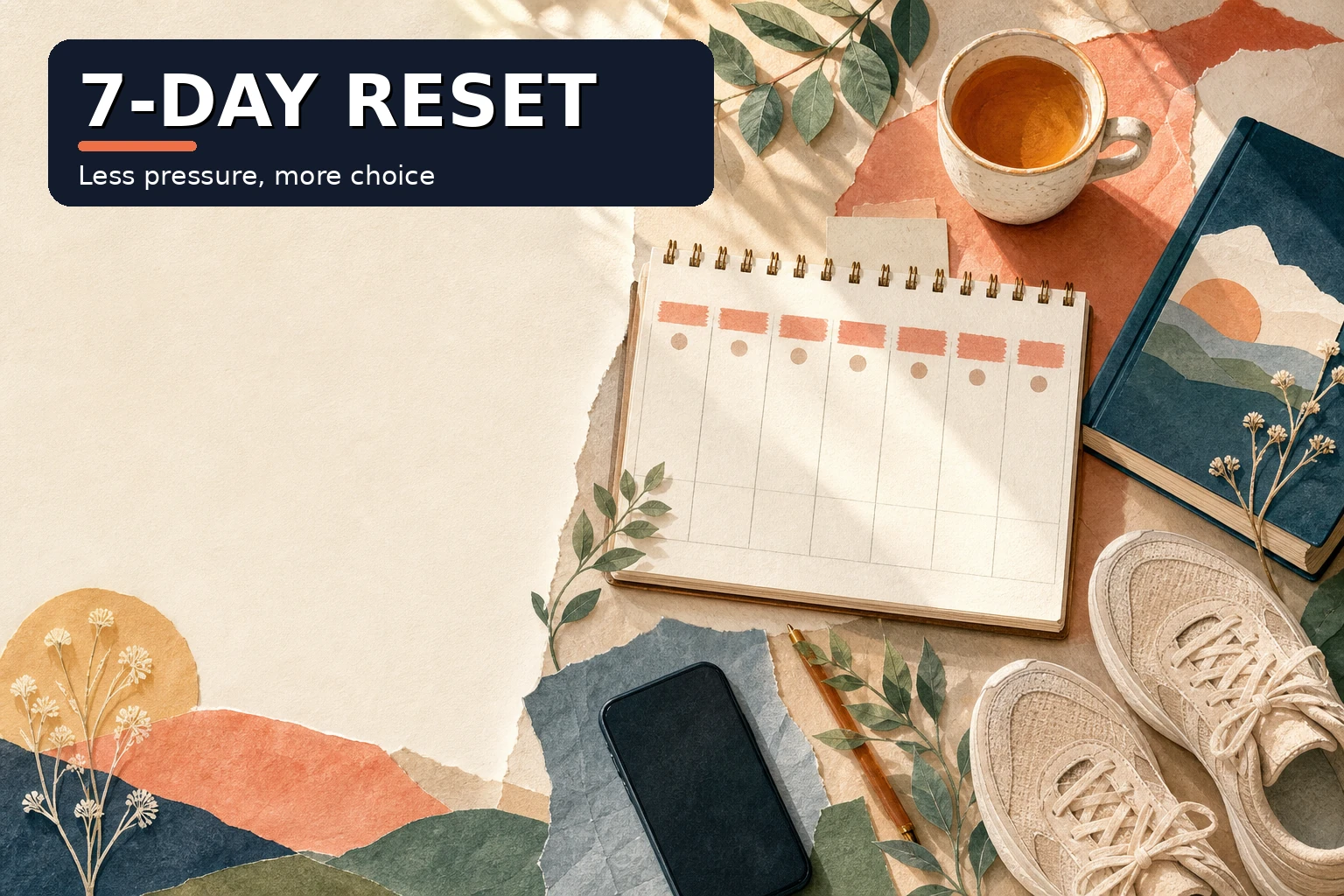
A reset does not need to be dramatic. Try this simple version:
- Day 1: turn off notifications and note when you usually open the platform.
- Day 2: remove the shortcut from your home screen or browser favourites.
- Day 3: replace one automatic session with a walk, meal, book or offline hobby.
- Day 4: write down what you actually wanted when you opened the platform: company, distraction, curiosity or practice.
- Day 5: spend time with one person you already know instead of searching for a new conversation.
- Day 6: decide what boundaries would make a future session feel lighter.
- Day 7: choose whether to return intentionally, extend the break or change your routine.
The aim is not to make online connection seem bad. It is to give your attention a chance to become a choice again.
What to do instead of opening another chat automatically
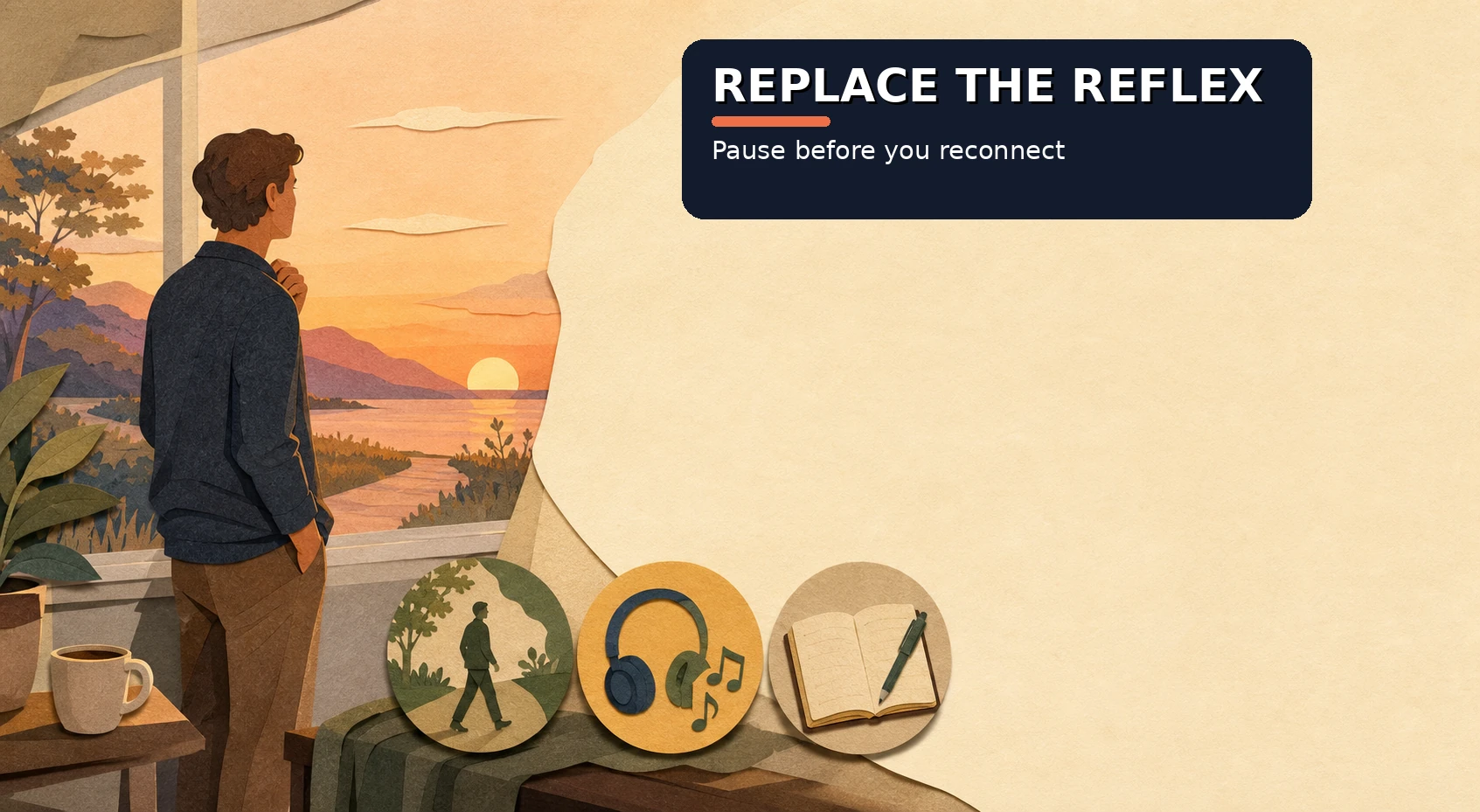
Removing a habit leaves a gap. If you do not decide what belongs in that gap, your hand may return to the same icon without you noticing.
Choose replacements that match the reason you usually open random chat. If you want stimulation, try music, cooking or a short creative task. If you want company, message one trusted person or make a plan for later. If you want to practise speaking, record a private voice note or read aloud for five minutes.
If you are tired, do not turn your break into another productivity project. Rest is a valid replacement. A quiet room, a shower or an early night can do more for your attention than another hour of low-energy scrolling.
The existing guide to talking with strangers online safely can help when you return. It is easier to respect your own limits when you have already decided what they are.
How to return to random chat without recreating the same fatigue
Returning does not mean going back to the exact routine that drained you. Start with a purpose. You might want one interesting conversation, a short language exchange or a limited social break after work.
Set a time boundary before you begin. Decide how many sessions or minutes you want, then stop while the experience is still neutral or positive. Leaving with some energy left is a better result than squeezing every possible match out of the evening.
Use a simple check-in after each session:
- Do I feel more connected or more scattered?
- Did I enjoy the interaction or only the anticipation?
- Am I choosing to continue, or am I avoiding the moment when I stop?
- Would a different time, device or conversation format feel better?
For practical ideas about making a session more engaging without forcing it, see these tips for stronger conversations. If you are returning after a longer pause, the beginner guide to starting a live conversation can help you rebuild the routine slowly. Better sessions are not necessarily longer sessions.
Intentional session versus autopilot session
| Intentional session | Autopilot session | Useful adjustment |
|---|---|---|
| You know why you are opening the platform. | You open it whenever a moment feels empty. | Name the need first: company, curiosity, practice or fun. |
| You choose a time limit before starting. | You continue until you feel irritated or exhausted. | Set a stop point while your mood is still good. |
| You skip when the interaction is not right. | You keep searching for a perfect match. | Accept that some sessions will be ordinary. |
| You take breaks between conversations. | You treat every pause as a reason to click again. | Use a short offline reset between matches. |
| You protect sleep and other plans. | The session expands into the rest of the evening. | Use a no-chat window before bed or important tasks. |
Common mistakes when trying to take a digital break
- Making the break so extreme that one difficult day feels like failure.
- Replacing random chat with a different endless feed.
- Keeping every notification active and relying only on willpower.
- Taking a break without deciding what you want to learn from it.
- Returning with no time limit because you feel you have “earned” unlimited access.
- Using the break to isolate yourself from every form of social contact.
- Treating tiredness, anxiety or low mood as a personal weakness.
A break should create more choice, not another rule you punish yourself for breaking. Adjust the plan if it is not realistic.
When online fatigue deserves more support than a break
A short break can help with a habit, but it cannot solve every problem. If low mood, anxiety, sleep disruption, panic or loss of interest continues beyond your online routine, consider speaking with a qualified health professional or someone you trust.
Geisinger’s advice on recognizing when a social-media break may help also stresses balance, boundaries and paying attention to how online use affects everyday life. The same principle applies here without treating “conversation burnout” as a diagnosis.
For privacy and reporting habits when you do return, keep the complete privacy guide nearby. Your wellbeing and safety matter more than finishing a conversation.
FAQ: taking a break from random chat
Is conversation burnout a real medical diagnosis?
No. In this article, it is a practical phrase for feeling mentally or emotionally drained by repeated online conversations. If your symptoms affect daily life, speak with a qualified professional rather than self-diagnosing.
How long should a random-chat break last?
There is no universal length. Try a short pause first, then a weekend or seven days if the habit feels automatic. Choose a period that gives you useful information rather than creating unnecessary pressure.
Should I delete my account to take a break?
Usually not. Turning off notifications, removing shortcuts or logging out may be enough. A temporary boundary is often easier to evaluate than a permanent decision.
What if I feel lonely during the break?
Replace the format, not all connection. Contact someone you trust, join an offline activity or plan a conversation for later. A break from random matching does not require isolating yourself.
How do I know when I am ready to return?
Return when curiosity is stronger than compulsion. Set a clear purpose and time limit, then check how you feel afterward. If you immediately feel drained, extend the pause.