Safest Random Chat Sites This Year: Our Researched Recommendations for 2026


 0
0
 0
0
The collapse of Omegle left a fragmented landscape of video chat platforms. Some genuinely improved on Omegle’s foundation; others exist primarily to harvest data or exploit users. After extensive testing across dozens of platforms, the safety picture is clearer than ever—though far from uniform.
What Actually Makes a Random Chat Site Safe
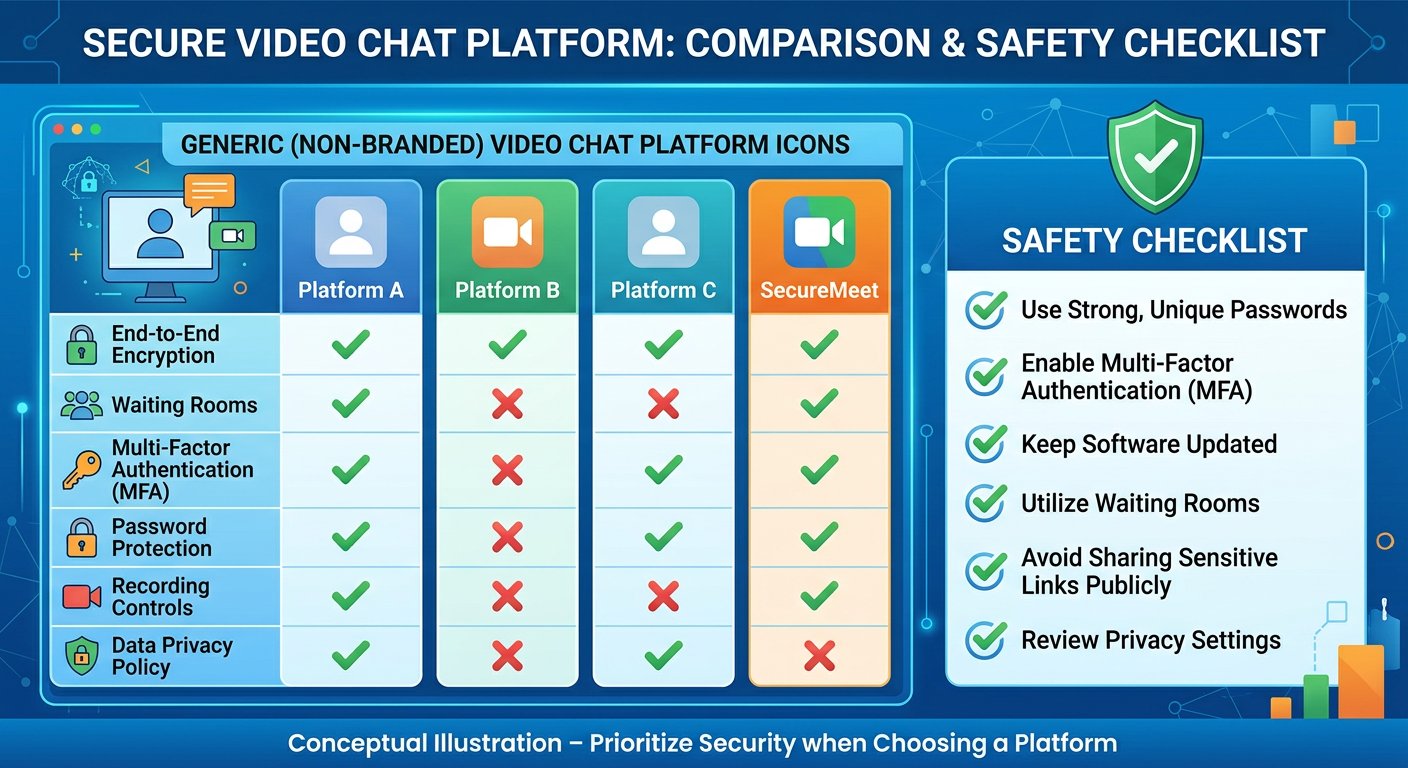
Platform safety isn’t a single feature—it’s a combination of technical systems, operational practices, and user empowerment tools. Research on platform safety identifies the key elements that separate genuinely safe platforms from those merely claiming to be.
Active content moderation. The baseline expectation in 2026 is AI-powered moderation that detects nudity, flags abusive behavior, and automatically bans repeat offenders. Research shows that eight out of ten teens reported exposure to online risks in 2024, which underscores why these systems matter. Manual review alone can’t keep pace with thousands of simultaneous video streams.
Accountability structures. Platforms requiring any form of login—even social account authentication—see lower abuse rates than those offering completely anonymous chat. Accountability discourages the worst behavior. The key differentiator isn’t whether accounts are required, but whether persistent violators face meaningful consequences.
Response speed on reports. Reporting and blocking tools exist on nearly every platform, but response speed separates effective moderation from performative moderation. Platforms that investigate and act on user reports within hours demonstrate commitment to community safety.
Transparent data practices. Safe platforms explain what data they collect, how long they retain it, and who they share it with. Privacy isn’t optional for genuinely safe platforms—it’s foundational.
Safest Random Chat Platforms for 2026
Based on extensive testing, these platforms demonstrate the strongest commitment to user safety:
Chaturro
The only platform tested with active language-aware matching combined with strict moderation. Platform research shows that Chaturro’s core product offers random video matching with no registration and full feature set—free with no paywall. The matching algorithm addresses the quality problem that made Omegle’s final years frustrating, connecting users with shared language and interests rather than pure random chance.
Moderation implementation is strictest among tested platforms, with active monitoring that reduces inappropriate content exposure significantly compared to competitors. No premium tier unlocks essential safety features because the platform doesn’t need them as upsells.
Camsurf
Clean interface with strict moderation and a family-friendly approach. Native apps for both iOS and Android complement browser access, providing consistent safety features across devices. The platform maintains a stronger focus on creating a controlled environment compared to more permissive alternatives.
Emerald Chat
Positioned as the thinking person’s alternative to random cam-to-cam chat. Comparative testing shows Emerald Chat’s interest-based matching helps users find people who share common interests rather than relying on pure chance. This produces more engaging conversations and naturally reduces encounters with users seeking inappropriate content.
Ome.tv
Strong global presence with excellent mobile experience and large international user base. The platform offers dedicated iOS and Android apps alongside browser access, making consistent safety practices available across devices. Concentration in European markets provides better match quality during peak hours for users speaking European languages.
Safety Features That Actually Matter
Research on content moderation effectiveness reveals that message-level filtering alone captures only a fraction of unsafe interactions. Context-dependent harm often emerges over multiple conversation turns, making single-message analysis insufficient.
Look for platforms implementing:
Behavioral analysis. Systems that track user patterns across sessions—not just individual messages—can identify and remove persistent violators who learn to avoid keyword triggers.
Context-aware moderation. Platforms that understand conversation flow, not just isolated statements, provide better protection against escalating situations.
Clear user empowerment. Easy-to-use reporting systems, visible block functions, and transparent appeals processes give users meaningful control over their experience.
Consistent enforcement. Policies applied uniformly across platforms build trust. Inconsistent moderation creates confusion and allows bad actors to exploit gaps between different surfaces.
Hybrid moderation approaches. AI moderation research demonstrates that combining AI’s speed and scalability with human judgment’s contextual awareness produces the best outcomes. Fully automated systems miss nuance; fully manual systems can’t scale.
What to Avoid
Certain patterns consistently indicate problematic platforms:
No reporting mechanism. If you can’t find an obvious way to flag problematic users or content, the platform either doesn’t care about safety or doesn’t want to receive feedback about problems.
Excessive data requests before core functionality. Platforms demanding contacts, location, or extensive personal information before basic video chat works have monetization strategies built around data collection, not user experience.
Vague or missing privacy policies. Unable to find clear explanations of data handling? Intentional opacity signals that practices might not withstand scrutiny.
No moderation improvement evidence. Platforms that haven’t updated their safety approach in years demonstrate static commitment at best—and may simply not prioritize user protection.

Frequently Asked Questions
Are all Omegle alternatives equally safe?
No. Testing reveals significant variation in moderation effectiveness, data practices, and user protection tools. Platforms like Chaturro and Camsurf have the strictest active moderation, while others maintain looser enforcement especially during off-peak hours. None of the major platforms are malicious by design, but the actual safety experience varies dramatically based on platform implementation.
Does requiring account creation make a platform safer?
Account-based systems generally see lower abuse rates because accountability discourages worst behavior. However, account requirements also reduce anonymity—which some users value. The key is whether platforms combine accountability with privacy protection rather than using accounts as an excuse to collect extensive personal data.
What safety features should I prioritize when choosing a platform?
Focus on real-time moderation that actively detects inappropriate content, clear reporting tools with demonstrated response, transparent data practices explaining what information is collected and shared, and consistent enforcement that applies policies uniformly. Avoid platforms that only mention “community guidelines” without specifics about implementation.
Can AI moderation alone keep me safe on random chat platforms?
No. Research shows AI moderation alone misses context-dependent harm that emerges across multiple conversation turns. The most effective platforms combine AI detection for speed and scale with human review for nuanced situations. Look for platforms that acknowledge this hybrid approach rather than claiming AI alone is sufficient.
Is a platform that claims to be “family-friendly” automatically safer?
Not necessarily. Family-friendly positioning often indicates stricter content policies and younger user demographics, but it doesn’t guarantee better moderation systems or more transparent data practices. Evaluate specific safety features rather than marketing claims about environment type.
For more on staying safe while using video chat platforms, explore our complete privacy guide and learn about talking to strangers online safely before connecting on any platform. You can also read our step-by-step safety setup guide for practical protection measures.